



 Share this page by mail
 Cyanoacrylate instant adhesive - Bostik Born2Bond™
Universal adhesives for high-performance bonding
The revolutionary range of Born2Bond™ Cyanoacrylate Adhesives is intended for high-precision bonding. These adhesives renown for their high performance, respect for the environment and safety, make it possible to obtain durable and fast adhesions to a very wide range of materials and surfaces.
Fast bonding and multi-substrate adhesion with Born2Bond™ Cyanoacrylate Adhesives
Available in several viscosities, Born2Bond™ Instant Adhesives are specifically designed to adapt to most substrates, including plastics, rubbers, metals, as well as more porous materials such as wood, leather, and fabric.
Their formulation provides for a quick and resistant assembly, ideal for materials difficult to glue and applications requiring an even distribution of stresses. These adhesives guarantee an exceptional resistance to tension and shearing, even when the assembly bends.
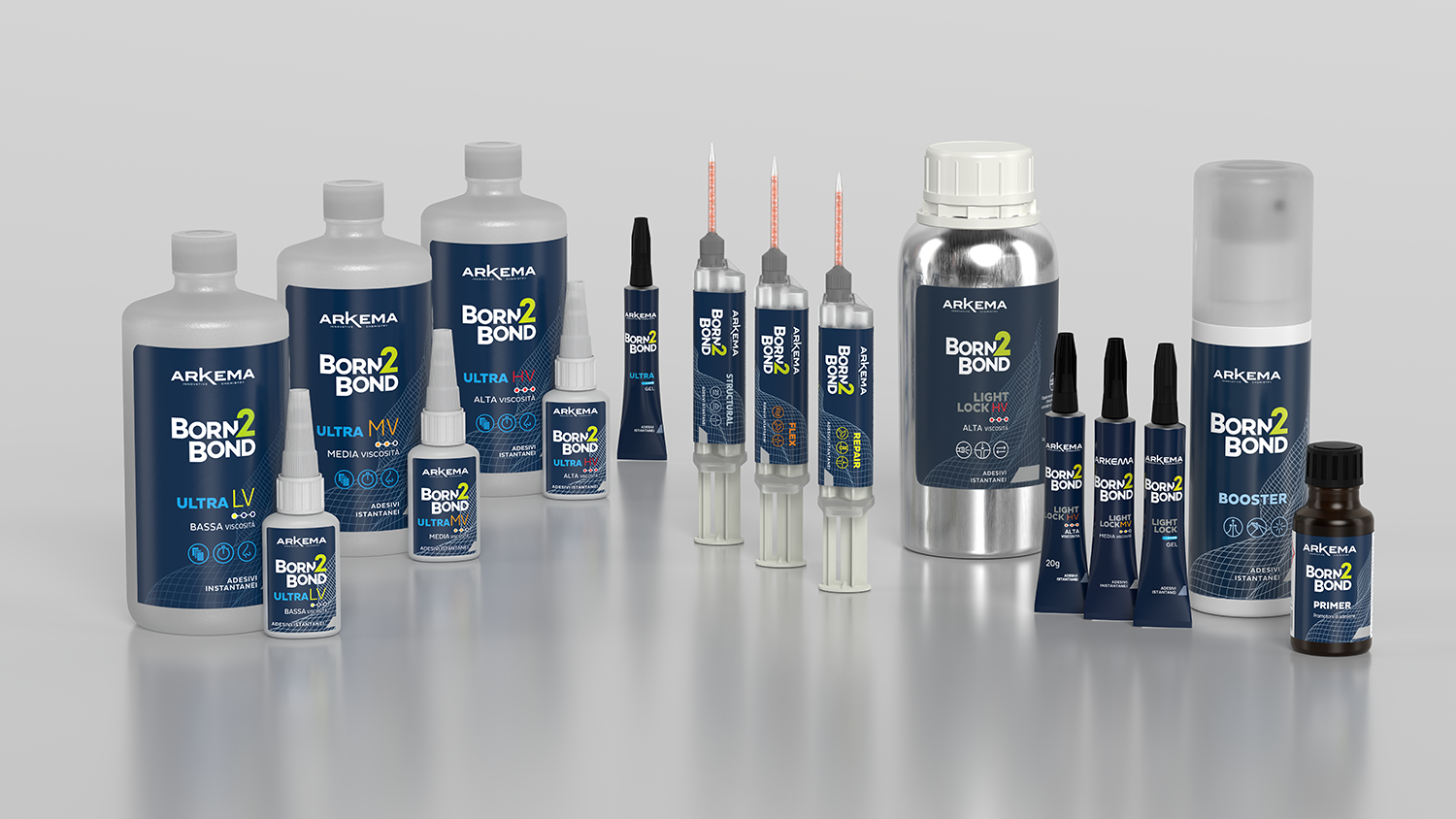
How are Born2Bond™ Instant Adhesives different from other adhesives?
Unlike ECA-based adhesives, which are very efficient but irritating and release a lot of white vapour, and traditional adhesives based on MECA technologies, which are limited in terms of performance and reactivity, Bostik Cyanoacrylates are based on the MECA technology from a new patented process. They provide better performance in all fields.
Bostik Instant Adhesives are characterised by their low odour, as well as their low efflorescence, limiting white vapour release. These characteristics make work environments safer and more comfortable for users, reducing the need for additional ventilation equipment while maintaining high performance.
CMR-free cyanoacrylate adhesives
The health and safety of our users are the priority of Born2Bond™ Adhesives. Not only our adhesives contain no carcinogenic, mutagenic or reprotoxic (CMR) substances, but they are also developed as to not be irritating. Therefore, they have no hazard label, which makes them perfectly safe products for users and the environment.
Responsible manufacturing and low environmental impact
Traditional adhesive manufacturing methods often consume a lot of energy and generate significant waste. Bostik uses innovating manufacturing processes which minimise energy consumption and reduce polluting emissions, while improving yield (which can reach 95% to 98%). These processes are far more environmentally friendly than conventional techniques.
These benefits support manufacturers’ efforts to reach their durability objectives, while addressing the concerns of users who care about their carbon footprint. By reducing the overall environmental impact, Bostik helps to implement more responsible and greener manufacturing processes.
Bostik Cyanoacrylate Glues, high performing products
Bostik Instant Adhesives are designed to offer an optimal impact resistance and increased durability, even in the most demanding conditions. Here are some of their characteristics*:
- High elongation: the adhesive is somewhat flexible without cracking
- High impact resistance: ideal for applications subject to mechanical stresses
- Gap-filling
- Dual polymerisation mechanism: reinforces assembly cohesion and reliability
- Resistance to high temperatures: up to 120 °C
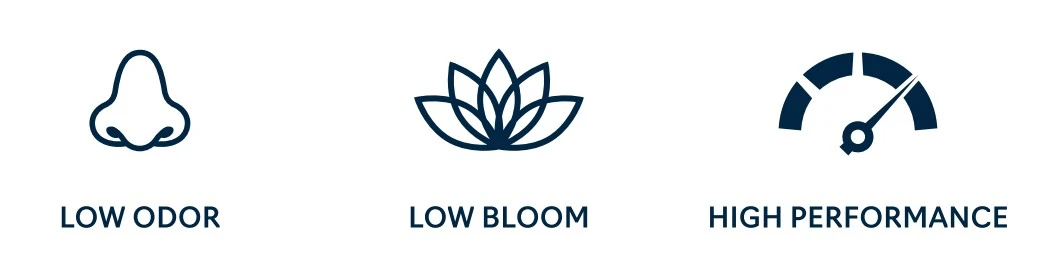
* According to references, to be validated by the technical department
Low efflorescence for a better visual quality
Another benefit of Bostik Cyanoacrylate Adhesives is their low efflorescence, reducing the whitening often observed in conventional adhesive applications. This characteristic produces assemblies with a flawless finish.
Well-designed packaging
Born2Bond™ Instant Adhesives are not only characterised by their technical performance, but also by their well-designed packaging for an optimal and environmentally friendly use.
- Precise dosage and ease of use: The bottles allow users to precisely control the flow for a clean application.
- Durable design: The caps of the Born2Bond™ adhesive bottles are made in recycled plastic.
The different ranges of Born2Bond™ adhesives
Our Born2Bond™ adhesives are available in several ranges:
- Born2Bond™ Ultra: Ultra LV, Ultra MV, Ultra HV, and Ultra Gel
- Born2Bond™ Flex
- Born2Bond™ Repair
- Born2Bond™ Structural
- Born2Bond™ Light Lock: HV and Gel
Prepare your surfaces
The best way to ensure a long-lasting adhesive bond is to properly clean the parts before bonding them together. Our partner Bostik has developed a range of solutions under the Born2Bond™ brand specifically designed to cover all the different steps of the surface preparation process:
- Born2Bond™ Seez-Release
- Born2Bond™ Adhesive & Gasket Remover
- Born2Bond™ Pre-Bonding Cleaner
- Born2Bond™ Primer
- Born2Bond™ Anaerobic Activator
- Born2Bond™ Booster
- Born2Bond™ 6-in-1 Lubricant
More information on Born2Bond™ Surface Preparation Products
Comprehensive service
Final Advanced Materials provides you with not only the adhesives you need, but also offer personalised support to guarantee you choose the right product. Our team of experts is at your disposal to analyse your specific needs and recommend the industrial cyanoacrylate adhesive the most suitable for your projects.
However, the list of characteristics in this table will help you identify the products you require.
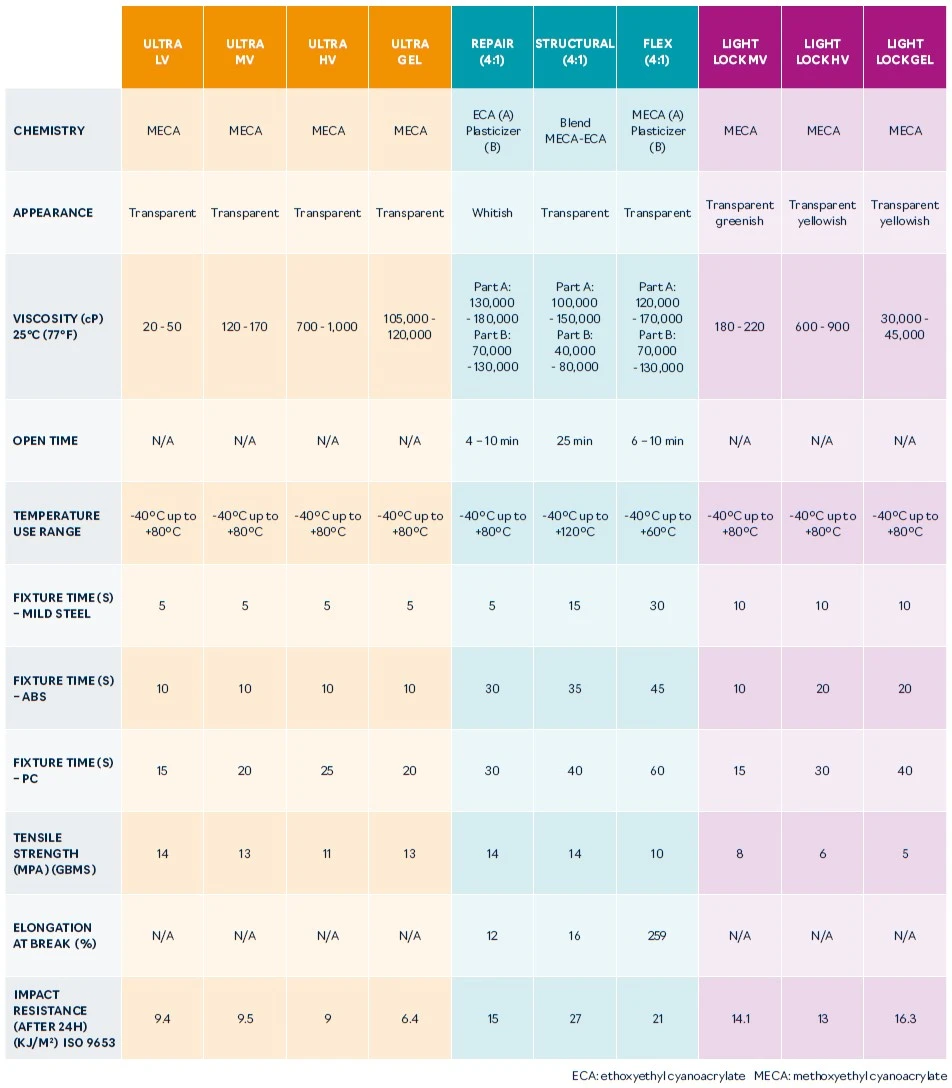

Ultra - Cyanoacrylate adhesive Bostik Born2Bond™

Ultra Gel - Cyanoacrylate adhesive Bostik Born2Bond™

Flex - Cyanoacrylate adhesive Bostik Born2Bond™

Repair - Cyanoacrylate adhesive Bostik Born2Bond™

Structural - Cyanoacrylate adhesive Bostik Born2Bond™

Light Lock - Cyanoacrylate adhesive Bostik Born2Bond™

Booster - Cyanoacrylate adhesive Bostik Born2Bond™

Cleaner - Bostik Born2Bond™
FAQs that can help you in this category
The choice depends mainly on the temperature and the mechanical stresses. Final Advanced Materials' high-temperature epoxy resins are generally limited to between 150 and 350°C, with satisfactory mechanical resistance (typical sheer-stress 10–30 MPa) and a degree of elasticity. However, the ceramic cements produced by Final Advanced Materials can be used up to 2,200°C, depending on the grade (alumina, zirconia, silicate, silica). They have excellent temperature resistance, but remain fragile (brittle behaviour, no elasticity). In the case of assemblies subject to differential expansion or vibration, epoxy is by far the preferred solution, if permitted by the maximum temperature of the application. However, in the case of extreme environments (kiln, vacuum, reducing atmosphere) which exceed 350°C, ceramic cement must be chosen.
The ceramic cements distributed by Final Advanced Materials have maximum working temperatures ranging between 650°C and 2,200°C. For example, alumina-based formulations often reach 1,650–1,760°C in an oxidising atmosphere. However, silicate systems are limited to around 1,000–1,200°C. The real maximum working temperature depends greatly on the environment (air, vacuum, inert gas), the time of exposure to this temperature and the thermal cycle (gradient, thermal shock). Specifically: the metal-loaded ceramic adhesives produced by Final Advanced Materials resist only up to the maximum temperature of the filler (650°C, for example, in the case of aluminium powder).
Ceramic/metal assemblies require often very different coefficients of thermal expansion (CTE) to be controlled. Final Advanced Materials recommends alumina-, silica- or zirconia-based ceramic cements for temperatures >350°C, which can bond to all types of ceramics and, generally, metals. For intermediate applications (≤350°C), an epoxy resin loaded with alumina powder enables thermal stresses to be absorbed and will be very compatible with different expansion coefficients. The thickness of the bond line must be between 100 and 300 µm to limit stress. Surface pre-treatment (sanding, degreasing, etc.) greatly improves adherence and is absolutely necessary if the CETs are very different.
The Cotronics adhesives distributed by Final Advanced Materials have variable cycles.
In the case of a cement, initial drying at ambient temperature takes between 2 to 24 h, depending on the viscosity and thickness. A thermal aftertreatment can be performed to allow them to attain their optimum properties after firing. Excessively rapid drying can lead to cracking or porosity in the cement.
Final Advanced Materials' epoxy adhesives which resist up to 260°C must be cured at ambient temperature. Epoxy adhesives which resist up to over 300°C require heat curing.