 Share this page by mail
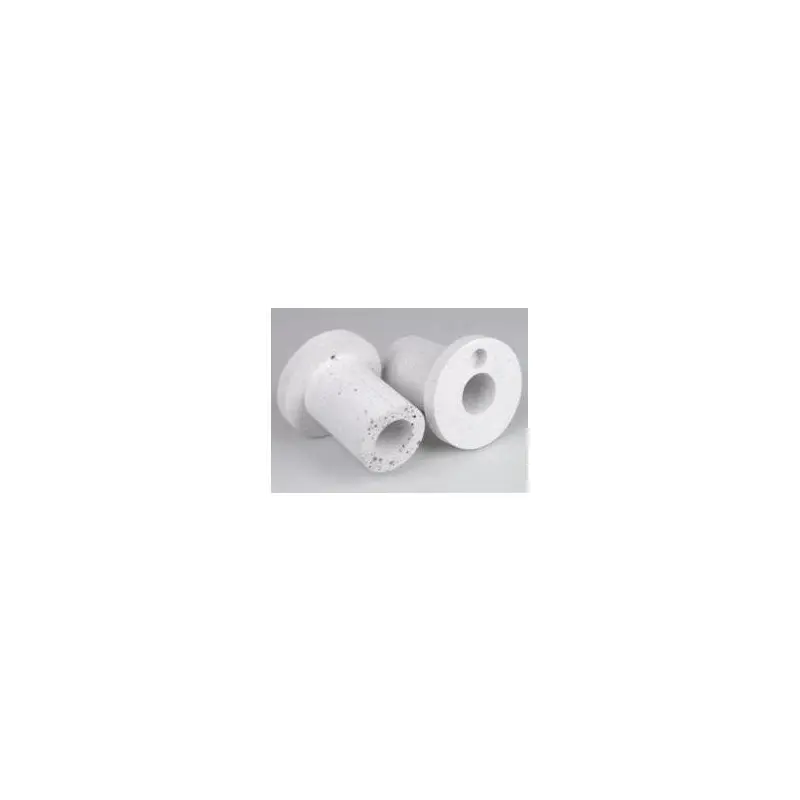
 Rescor 740 - Moldable Ceramic, Foam Insulation
Cotronics Rescor® 740 is a ceramic moulding cement for high temperature applications. It is a lightweight, low density but very strong insulating foam.
It is an alumina silicate based cement that is resistant up to 1260°C and can be diluted with water.
It is available in 5.5L, 3.7L, 26.5L, 7.4L and 55L packs.
For larger sizes, please contact us.

- Castable ceramic cement
- Excellent electrical resistance
- Alumina silicate
- Maximum temperature 1260°C

Yes, Final Advanced Materials produces epoxy resins loaded with silver, nickel or graphite with electrical conductivity (typical resistivity 10⁻⁴ to 10⁻³ Ω·cm) sufficient to enable a weld to be replaced. However, their temperature resistance is limited to 150–250°C under continuous temperature, or 300°C for short-term with thermal curing. Above this temperature the organic matrix degrades (under the effect of oxidisation and pyrolysis). NB: Final Advanced Materials' metal-loaded ceramic cements (nickel, aluminium or stainless steel) are not suitable for applications requiring electrical conductivity and high-temperature resistance (>350°C) because their electrical conductivity is far too low.
A castable ceramic cement has low viscosity, enabling casting or pouring in moulds of complex shapes. It is formulated to limit segregation, to ensure effective dimensional reproducibility, and to produce a ceramic part. Potting cement is used to encapsulate or fix components in an assembly.
At Final Advanced Materials castable cements are optimised for the manufacture of parts (final density 2.0–3.0 g/cm³), while potting cements are designed to prioritise adhesion in assemblies (housings, resistor overmoulding, etc.).
For foundry moulds Final Advanced Materials produces alumina, silicon carbide, silica or zirconia-based cements, which are suited for temperatures between 1,200 and 2,200°C. Zirconia formulations are particularly suitable if a very high resistance to chemicals is required. Alumina cements have better mechanical resistance (>40 MPa in compression). SiC cement is a very good option for molten metal casting, launders, crucibles or nozzles. The choice depends on the cast metal and the temperature (e.g.: aluminium ~700°C, steel >1,500°C) and the thermal shock resistance.
The ceramic casting cements produced by Final Advanced Materials have standard compression resistances of 10 to 40 MPa, depending on the formulation and porosity. Thermal shrinkage is generally low, reducing internal stresses and cracking. Dense alumina-based formulations offer the best mechanical performance, while more insulating systems have a lower resistance, but reduced thermal conductivity (<0.15 W/m·K).