



 Share this page by mail
 Anaerobic adhesives - Bostik Born2Bond™
What is Bostik Born2Bond™ Anaerobic Adhesive?
Bostik Anaerobic Adhesives, from the Born2Bond™ range, are mono-component acrylate-based assembly solutions for professional use.
These innovating and environmentally friendly adhesives meet fastening and sealing needs in various industrial sectors. By providing a reliable and cost-effective alternative to traditional methods such as screws, nuts and washers, they eliminate the risk of loosening often caused by vibrations, thermal dilatation or inappropriate couplings. Born2Bond™ Anaerobic Adhesives thus guarantee safer, more durable and better performing assemblies, even in difficult conditions.
Unclassified, NSF-certified and environmentally friendly adhesives
For sustainable reasons, Bostik created the range of Bostik Born2Bond™ Anaerobic Adhesives by focusing on solvent-free solutions. These products not only respect the environment and are safe for users, but some grades are also NSF (National Sanitation Foundation) certified, guaranteeing their compliance with food safety standards.
Bostik also developed the WL range, specifically designed to remedy problems linked to the environment, health and safety (EHS). These products are not classified as hazardous substances or mixtures according to the CLP Regulation.
What applications for Born2Bond™ Anaerobic Adhesives?
Thanks to their easy and quick application, they effectively replace seals, washers, pins and other traditional fasteners. Renown for their excellent resistance to leaks, corrosion and torsion, Bostik Born2Bond™ Anaerobic Adhesives are suitable both for high precision applications and the heavy industry.
Anaerobic adhesives cover many industrial needs: threadlocking, retaining, pipe sealing and gasketing.
.webp)
Anaerobic adhesives as threadlockers
Born2Bond™ Threadlocking Anaerobic Adhesives are mono-component solutions for blocking threads in numerous applications, especially preventive maintenance.
Not only these products eliminate the cost and inconvenience linked to large spare part inventories, but they also fill all the gaps between parts for a perfect seal and a cohesive metal bond whose integrity is maintained even in the event of vibrations, extreme temperatures and exposure to chemicals.
Discover Born2Bond™ Threadlocking Anaerobic products: TA-22, TA-43, TA-70, TA-90, TA-WL low strength, TA-WL medium strength, TA-WL high strength
Retaining solution
Born2Bond™ Retaining Adhesives are efficient, adaptable alternatives and even complement retaining mechanical processes. Capable of bonding all types of cylindrical assemblies, these mono component solutions also seal all metal junctions to eliminate the risk of corrosion through friction. These adhesives ensure full surface-to-surface contact, for a cohesive and durable whole, capable of resisting vibrations, extreme temperatures and chemicals.
Discover anaerobic adhesive products intended for retaining processes: RA-38, RA-03, RA-20, RA-41, RA-48, RA-60, RA-WL
Anaerobic products for pipe sealing
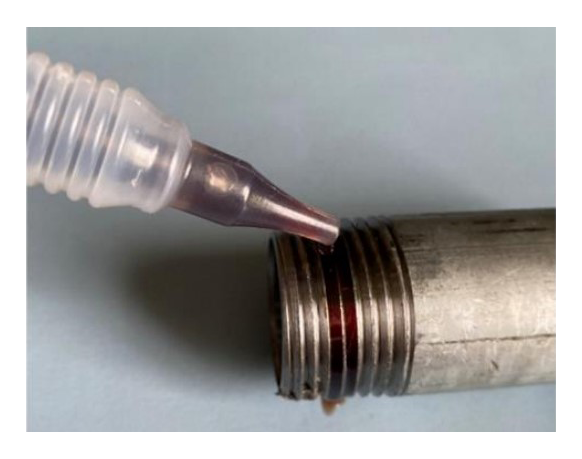
Born2Bond™ Pipe Sealing Anaerobic Adhesives are reliable and adaptable solutions which are suitable for all types of threaded metal pipes and fittings, new installations and preventive maintenance. They act by filling and sealing gaps to ensure full surface-to-surface contact. The whole is cohesive, durable and permanent, even in the event of vibrations, extreme temperatures and the presence of chemicals. Practical and cost-effective alternatives to conventional sealing solutions such as fibre or PTFE tape, these adhesives avoid having to stock additional spare parts.
Discover anaerobic adhesive products intended for pipe sealing: PA-77, PA-42, PA-WL
Bostik Anaerobic Adhesives for gasketing
Bostik Born2Bond™ Gasketing Anaerobic Adhesives are mono-component cost-effective alternatives to conventional preformed gaskets on metal flanges. Flexible, durable and resistant to wear and tear and shearing, they can be used for installation such as preventive maintenance. These adhesives ensure full surface-to-surface contact for a cohesive and durable whole which resists to vibrations, extreme temperatures and exposure to oils, solvents and water. They also provide a more even distribution of stresses and unlike conventional gaskets, they do not require any 'bedding-in'.
Prepare your surfaces before bonding
The best way to ensure a long-lasting adhesive bond is to properly clean the parts before bonding them together. Our partner Bostik has developed a range of solutions under the Born2Bond™ brand specifically designed to cover all the different steps of the surface preparation process:
More information on Born2Bond™ Surface Preparation Products
Customised service
Final Advanced Materials provides you not only with the adhesives you need but also offers personalised support to choose the industrial adhesive the most suitable for your needs. Our team of experts is available to analyse your projects and recommend the optimal solution.
However, to help with your selection, see our table comparing product characteristics.
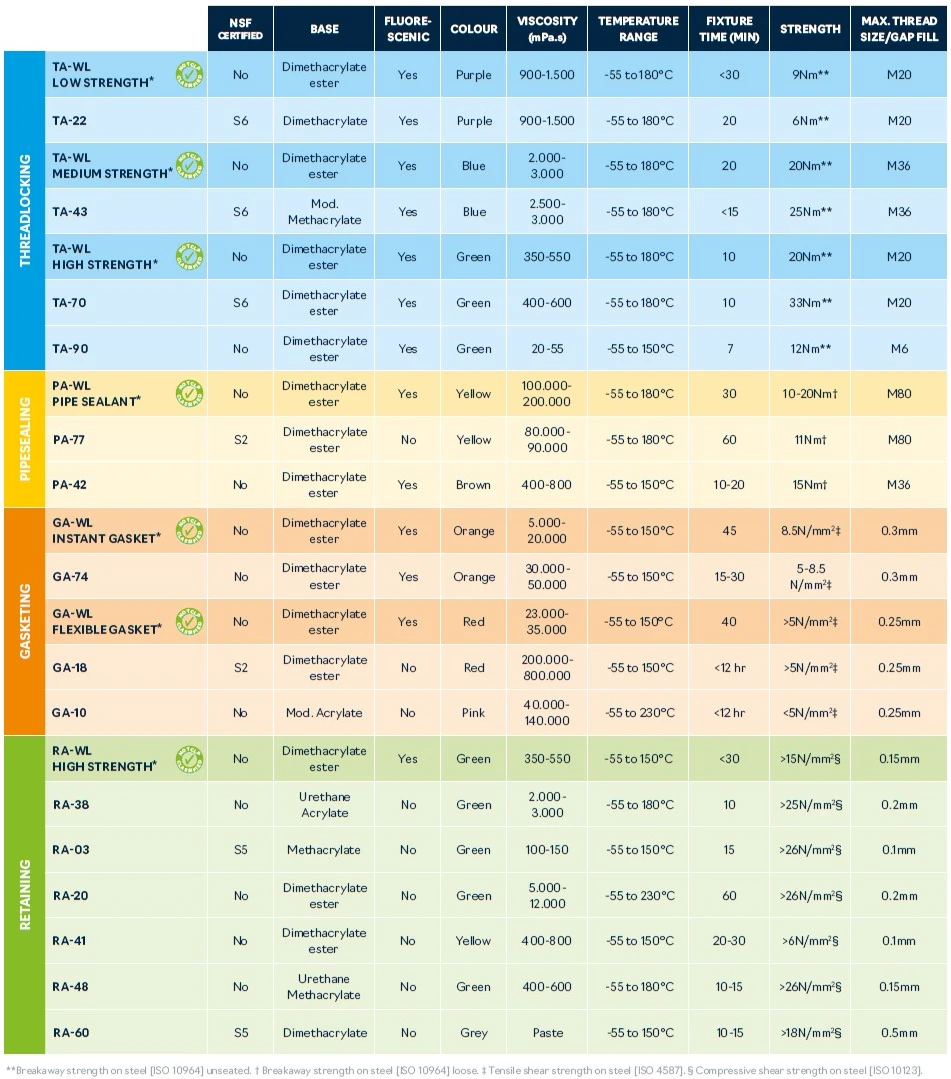

Threadlocking - Anaerobic adhesives Bostik Born2Bond™

Pipe Sealing - Anaerobic adhesives Bostik Born2Bond™

Gasketing - Anaerobic adhesives Bostik Born2Bond™

Retaining - Anaerobic adhesives Bostik Born2Bond™
FAQs that can help you in this category
The choice depends mainly on the temperature and the mechanical stresses. Final Advanced Materials' high-temperature epoxy resins are generally limited to between 150 and 350°C, with satisfactory mechanical resistance (typical sheer-stress 10–30 MPa) and a degree of elasticity. However, the ceramic cements produced by Final Advanced Materials can be used up to 2,200°C, depending on the grade (alumina, zirconia, silicate, silica). They have excellent temperature resistance, but remain fragile (brittle behaviour, no elasticity). In the case of assemblies subject to differential expansion or vibration, epoxy is by far the preferred solution, if permitted by the maximum temperature of the application. However, in the case of extreme environments (kiln, vacuum, reducing atmosphere) which exceed 350°C, ceramic cement must be chosen.
The ceramic cements distributed by Final Advanced Materials have maximum working temperatures ranging between 650°C and 2,200°C. For example, alumina-based formulations often reach 1,650–1,760°C in an oxidising atmosphere. However, silicate systems are limited to around 1,000–1,200°C. The real maximum working temperature depends greatly on the environment (air, vacuum, inert gas), the time of exposure to this temperature and the thermal cycle (gradient, thermal shock). Specifically: the metal-loaded ceramic adhesives produced by Final Advanced Materials resist only up to the maximum temperature of the filler (650°C, for example, in the case of aluminium powder).
Ceramic/metal assemblies require often very different coefficients of thermal expansion (CTE) to be controlled. Final Advanced Materials recommends alumina-, silica- or zirconia-based ceramic cements for temperatures >350°C, which can bond to all types of ceramics and, generally, metals. For intermediate applications (≤350°C), an epoxy resin loaded with alumina powder enables thermal stresses to be absorbed and will be very compatible with different expansion coefficients. The thickness of the bond line must be between 100 and 300 µm to limit stress. Surface pre-treatment (sanding, degreasing, etc.) greatly improves adherence and is absolutely necessary if the CETs are very different.
The Cotronics adhesives distributed by Final Advanced Materials have variable cycles.
In the case of a cement, initial drying at ambient temperature takes between 2 to 24 h, depending on the viscosity and thickness. A thermal aftertreatment can be performed to allow them to attain their optimum properties after firing. Excessively rapid drying can lead to cracking or porosity in the cement.
Final Advanced Materials' epoxy adhesives which resist up to 260°C must be cured at ambient temperature. Epoxy adhesives which resist up to over 300°C require heat curing.