



 Share this page by mail
 Fast-curing UV Acrylic Adhesives – Bostik Born2Bond™
The range of fast-curing solvent-free UV adhesives (UV-CIPG) is specifically designed to meet needs requiring a careful and precise application, such as in the electronic and automotive sectors.
What are the benefits of Bostik UV-CIPG Adhesives?
UV adhesives offer durable and high quality results. They meet the challenges of modern industrial processes: crosslinking on demand, efficiency, automation, high resistance and waste reduction.
Flexible crosslinking: polymerisation on demand
One of the great benefits of the adhesives of the Bostik Born2Bond™ UV-Cure-In-Place Gasket (UV-CIPG) range is the possibility to control the time of polymerisation. Unlike traditional adhesives, UV acrylic adhesives do not react as long as they are not exposed to UVs and therefore allow users to take the time necessary to evenly apply the adhesive. This process provides crosslinking on demand and ensures complete and immediate polymerisation, which increases productivity.
Automated and programmable application
Born2Bond™ UV products can be applied using a wide variety of equipment and methods. In particular, they can be easily applied with an automated and programmable system of application for a specific application area. This technique saves numerous hours on the application time and also reduces the volume of materials used.
Universal compatibility with UV lamps
UV Born2Bond™ Glues react to a very wide UV wavelength range, between 365 and 405 nm, which maximises compatibility with existing UV lamps. With nearly all UV lamps on the market, photoinitiators get triggered and then start the polymerisation process. It also provides for a safer polymerisation.
High resistance and durability
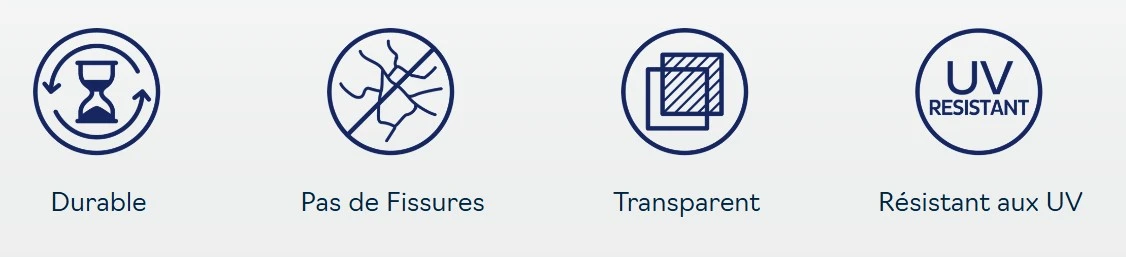
Thanks to their anti-cracking properties, the adhesives of the Born2Bond™ UV-Cure-In-Place Gasket range have the advantage of not cracking, even under pressure or deformation. The Nanostrength® patented technology of Arkema, Bostik’s parent company, gives them properties of resistance to impacts, chemicals and temperature variations. They produce sealed joints resistant to water and dust. These properties guarantee the assembly longevity.
The exothermal reaction reduced during the polymerisation (< 50 °C) prevents unwanted mechanical stresses and thus protects fragile substrates.
Applications for Bostik UV Born2Bond™ Adhesives
UV-Cure-In-Place Gasket Born2Bond™ Adhesives are compatible with a multitude of substrates, especially metals, glass and plastics such as ABS and PMMA.
UV Born2Bond™ Glue remains clear once it is polymerised, without yellowing, which makes it particularly suitable for applications in the fields of luxury products: perfume and cosmetic packaging, jewellery and watch assembly.
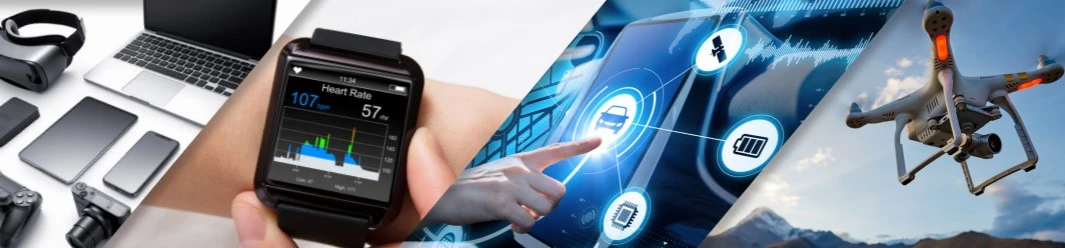
In electronics, it meets the assembly and protection needs of circuit boards, while in the automotive sector, it is useful in advanced driver assistance systems (ADAS).
Characteristics of UV adhesives
- Low shrinkage and anti-cracking properties
- Clear after reticulation (no yellowing)
- Very durable - resistance to impacts, chemicals and temperature, with low water absorption.
- Multi-substrate adhesion (metals, glass, plastics, including ABS and PMMA)
- Gap-filling properties
- Reacts to a wide range of UV wavelengths (between 365 and 405 nm)
- High elongation
- Can be applied using a great variety of equipment and methods
- Low exothermal reaction during formation (< 50 °C)
Our team of experts is at your disposal to analyse your specific needs and recommend the UV adhesive the most suitable for your projects.
Prepare your surfaces ahead of bonding
The best way to ensure a long-lasting adhesive bond is to properly clean the parts before bonding them together. Our partner Bostik has developed a range of solutions under the Born2Bond™ brand specifically designed to cover all the different steps of the surface preparation process:
FAQs that can help you in this category
The choice depends mainly on the temperature and the mechanical stresses. Final Advanced Materials' high-temperature epoxy resins are generally limited to between 150 and 350°C, with satisfactory mechanical resistance (typical sheer-stress 10–30 MPa) and a degree of elasticity. However, the ceramic cements produced by Final Advanced Materials can be used up to 2,200°C, depending on the grade (alumina, zirconia, silicate, silica). They have excellent temperature resistance, but remain fragile (brittle behaviour, no elasticity). In the case of assemblies subject to differential expansion or vibration, epoxy is by far the preferred solution, if permitted by the maximum temperature of the application. However, in the case of extreme environments (kiln, vacuum, reducing atmosphere) which exceed 350°C, ceramic cement must be chosen.
The ceramic cements distributed by Final Advanced Materials have maximum working temperatures ranging between 650°C and 2,200°C. For example, alumina-based formulations often reach 1,650–1,760°C in an oxidising atmosphere. However, silicate systems are limited to around 1,000–1,200°C. The real maximum working temperature depends greatly on the environment (air, vacuum, inert gas), the time of exposure to this temperature and the thermal cycle (gradient, thermal shock). Specifically: the metal-loaded ceramic adhesives produced by Final Advanced Materials resist only up to the maximum temperature of the filler (650°C, for example, in the case of aluminium powder).
Ceramic/metal assemblies require often very different coefficients of thermal expansion (CTE) to be controlled. Final Advanced Materials recommends alumina-, silica- or zirconia-based ceramic cements for temperatures >350°C, which can bond to all types of ceramics and, generally, metals. For intermediate applications (≤350°C), an epoxy resin loaded with alumina powder enables thermal stresses to be absorbed and will be very compatible with different expansion coefficients. The thickness of the bond line must be between 100 and 300 µm to limit stress. Surface pre-treatment (sanding, degreasing, etc.) greatly improves adherence and is absolutely necessary if the CETs are very different.
The Cotronics adhesives distributed by Final Advanced Materials have variable cycles.
In the case of a cement, initial drying at ambient temperature takes between 2 to 24 h, depending on the viscosity and thickness. A thermal aftertreatment can be performed to allow them to attain their optimum properties after firing. Excessively rapid drying can lead to cracking or porosity in the cement.
Final Advanced Materials' epoxy adhesives which resist up to 260°C must be cured at ambient temperature. Epoxy adhesives which resist up to over 300°C require heat curing.