 Share this page by mail
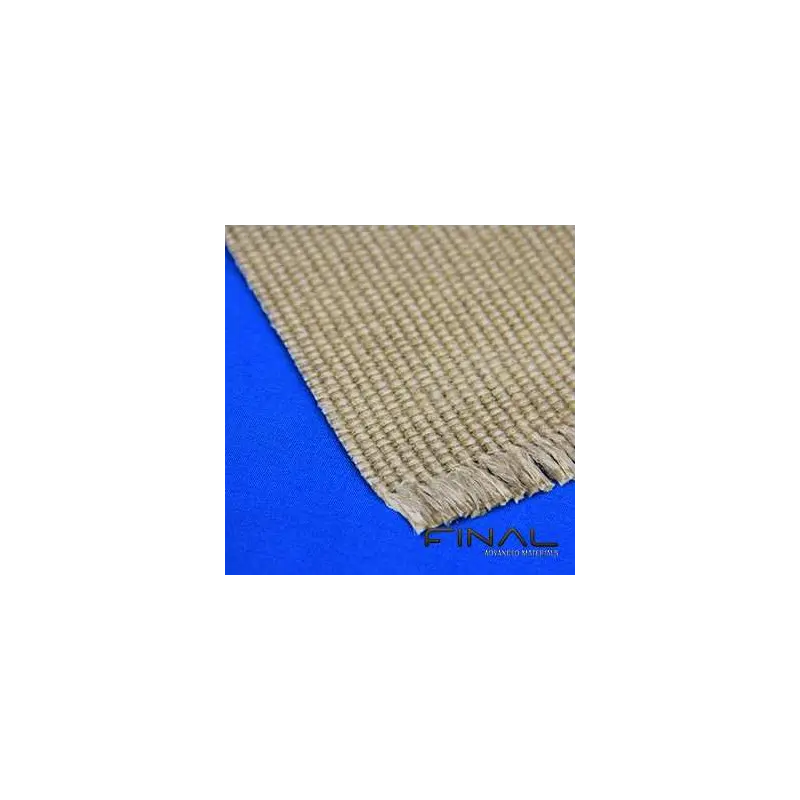
 ZetexPlus® fabrics
Final Advanced Materials has a wide range of aramidproducts available: threads, tapes, fabrics, etc.
Nomex® meta-aramid threads, known for their excellent thermal and chemical characteristics, are particularly suitable for the production of thermal protection.
They can withstand continuous temperatures of up to 220 °C.

- Heat and flame-resistant clothing, textiles and stitching
- Safety shoes
- Protective gloves
Final Advanced Materials offers a very wide selection of fabrics which can withstand temperatures ranging between -72°C and +2,000°C. For applications reaching temperatures as high as 550°C, fibreglass-based fabrics are the most versatile. They combine high mechanical and chemical resistances and are also effective electrical and thermal insulators. For applications with a continuous exposure to temperatures over 500°C, fabrics made from basalt fibre (800°C), silicate fibre (1,000°C) or ceramic fibre (1,300°C) are recommended. The choice of fabric depends on the desired application. Whether for insulation or protection, the service conditions are a determining factor for the choice of fabric.
The Zetex and ZetexPlus fabrics produced by Final Advanced Materials are both high-temperature fibreglass fabrics, used for thermal protection or insulation applications. Zetex fabrics are suitable for standard uses, with a resistance to temperatures of 540°C in continuous service and up to 700°C short-term. ZetexPlus fabrics are given a vermiculite-based treatment which improves their resistance to abrasion and mechanical stresses, while enabling them to withstand high temperatures, 815°C in continuous service, and up to 1,095°C short-term. The choice between these two materials therefore depends primarily on the working conditions.
Final Advanced Materials offers a wide range of products for extreme applications. Ceramic fibre-based and silicate fibre-based textiles are mainly used to manufacture parts in the aeronautical and aerospace sector.
They have an excellent thermal shock resistance, and can withstand exposure to temperatures of over 1,200°C short-term. These products are available in a wide range of forms, such as fabrics, braids, sleeves, tapes and non-wovens.
The ceramic fibre fabrics and the silica fibre fabrics offered by Final Advanced Materials are designed for the most extreme applications. When made into a fabric, ceramic fibres have a better stability at high temperature than silica-based fibres. Silica fibres have inferior mechanical properties and have a high shrinkage rate of 7 to 12%. It is however possible to thermally treat silica fabrics to reduce this shrinkage to only 1 to 4%.