 Share this page by mail
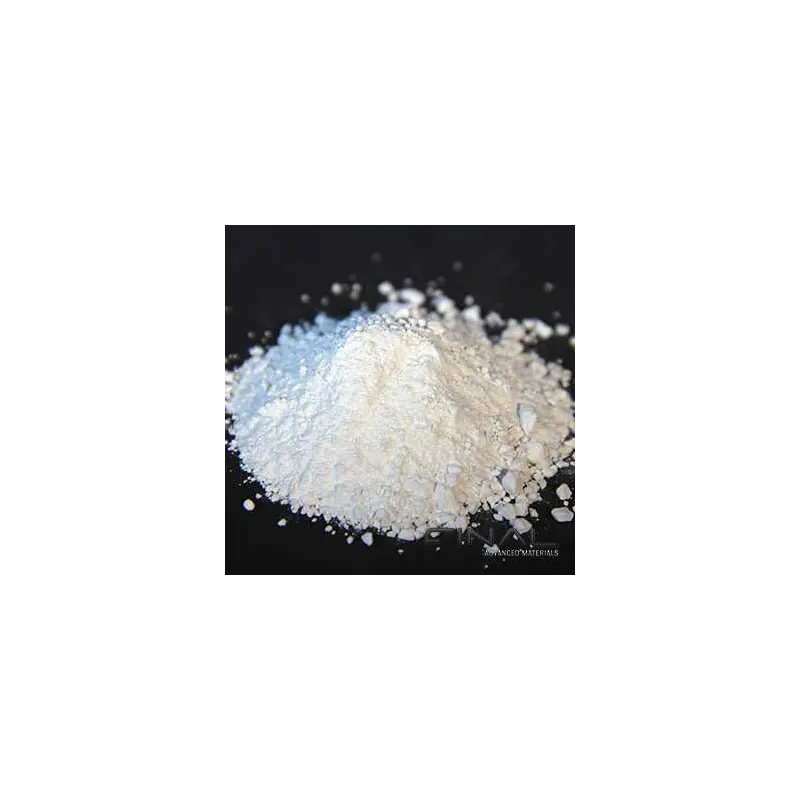
 Boron nitride ceramic powder
Boron nitride is a synthetic ceramic. As a powder, it is used in many applications: mould release, lubrication or as a filler for polymers to increase thermal conductivity.
It has various characteristics that differ according to the particle size (available from 1 to 280 µm) and that affect thermal conductivity, particle dispersion, lubrication, etc.
Boron nitride powder is available in various grades from 301 to 315.

- Use at very high temperatures: 900 °C in air and up to 2,500 °C in vacuum or inert atmosphere
- Good eletrical insulator
- High resistance to oxidation
- Low firction coefficient, very good lubricant
- Not wet by most metals or glasses
- High heat dispersion
Final Advanced Materials' hexagonal boron nitride (h-BN) is an excellent high-temperature dry lubricant due to its layered structure similar to that of graphite. It remains stable up to 900°C in air and 2,500°C in a vacuum or inert atmosphere. It also has a thermal conductivity of 30 to 60 W/(m·K). Its low hardness (~2 GPa) and low friction coefficient (~0.15) effectively reduce of wear. Unlike graphite, it offers good performances in an oxidising environment. Final Advanced Materials recommends h-BN powders for applications such as dry lubrication, mould release and high-temperature surface protection.
The choice depends on the desired thermal performance for the resin or composite. Aluminium nitride (AlN) powders increase thermal conductivity up to 150 to 200 W/(m·K), but also provide effective electrical insulation. Boron nitride powders (h-BN) increase thermal conductivity up to 40 to 60 W/(m·K) and thermal stability up to 800–900°C in air, providing a balance between conductivity and ease of application. Alumina powders (Al₂O₃), which are more cost-effective, provide a more moderate conductivity of 20 to 35 W/(m·K). Final Advanced Materials recommends adjusting the particle size and the load level to optimise overall performance.